At some point most metal players look at a 7-string and wonder whether they're missing…
Buying Your First Metal Guitar: What Actually Matters
Buying your first metal guitar should be exciting. For a lot of people it turns into a few weeks of spec sheets, forum arguments and YouTube comparisons, and they end up more confused than when they started. Buying one as a gift is even harder, because you’re trying to second-guess someone else’s taste in a genre you might not play.
Here’s the good news. A first metal guitar comes down to a handful of things that genuinely matter, and a much longer list that doesn’t matter yet. Get the first list right and you’ll have a guitar that sounds heavy, stays in tune and is a pleasure to pick up every day. That last part is what keeps people playing.
Why the first guitar matters more than you think
A bad first guitar doesn’t just sound bad. It makes learning harder. High action makes chords hurt. Tuning that drifts means everything you play sounds slightly wrong, even when you’re playing it right. Thin pickups make your riffs sound weak through any amp.
Beginners nearly always blame themselves for these things. Plenty of people give up guitar thinking they weren’t any good at it, when the real problem was a guitar fighting them the whole way. You don’t need the most expensive guitar. You need one that’s working with you, not against you.
Pickups: humbuckers, and enough output
If there’s one thing that separates a metal guitar from a general-purpose one, it’s the pickups.
Look for humbuckers, ideally two of them (an “HH” layout). Humbuckers cancel the hum that single-coil pickups pick up. That matters a lot once you’re using high gain, where every bit of noise gets amplified along with your playing. They’re also thicker and punchier, which is what gives palm-muted riffs their weight.
Output matters too. Higher-output pickups push the amp harder and stay tight when the gain goes up. Every Spira in the 400 Series is loaded with our own Villain humbuckers: custom-made, 12k output with ceramic magnets, voiced for tight low end and clear highs that don’t turn to fizz under high gain. That’s the same pickup used across most of the range, not a cut-down version for the cheaper models.
Bridge: start fixed
This is the advice most first-time buyers wish they’d heard. For a first guitar, choose a fixed bridge.
Floating tremolos (the kind that let you do dive bombs) are brilliant in experienced hands. But they’re harder to tune, harder to restring and much harder to set up. Change string gauge or tuning and the whole bridge needs rebalancing. For a beginner, that usually means a guitar that’s out of tune more often than it’s in.
A fixed bridge stays put. Restringing is simple, tuning holds, and dropping to drop D or drop C is a five-minute job rather than an afternoon. Most of the 400 Series uses a fixed bridge for exactly that reason.
If dive bombs and whammy tricks are the whole reason you want to play, it’s not off-limits. The SR-420 has a double-locking trem and is built for exactly that. Just go in knowing it’ll take a little more learning to look after.
The neck: comfortable before fast
The neck is where you’ll feel the difference between a guitar you love and one you put up with.
A few specs help here:
- Jumbo frets. Taller frets make notes easier to fret cleanly and bends easier to control. That makes a real difference when your hands are still building strength.
- A flatter fretboard radius. A 14″ radius is flatter than a vintage-style board, which makes fast playing and big bends feel easier without notes choking out.
- A comfortable profile. Spira’s Modern D neck is slim enough to move around quickly but has enough shoulder that your hand isn’t cramping after an hour.
- 24 frets. Not essential on day one, but if metal is the plan, those top frets will come into play sooner than you’d think.
All of that is standard across the 400 Series, along with an Ebony Tech fretboard on most models.
Tuning stability: the beginner’s best friend
When you’re learning, you can’t always hear whether a wrong note is your fault or the guitar’s. A guitar that stays in tune takes that question away.
Three things help a lot. Good tuners hold their pitch, and locking tuners, standard on the S-400, V-400 and L-400, make string changes faster and keep tuning steady. A stable neck matters too. Roasted maple moves far less with changes in temperature and humidity, so the neck doesn’t shift every time the seasons change. And as covered above, a fixed bridge keeps everything anchored.
Setup: the cheapest upgrade there is
Here’s something most people don’t know when they buy a first guitar: how it’s set up often matters more than which guitar it is.
Setup covers action height, neck relief and intonation. It’s the difference between strings that are easy to press down and strings that feel like cheese wire. Factory setups are a starting point. A guitar that’s travelled from the factory to the shop, through changes in temperature along the way, can always benefit from a check.
So buy from a dealer who’ll check the setup before it leaves the shop, or budget for a setup from a local tech. It’s not expensive, it’s usually done in a day, and it’s the best money a beginner can spend. If you plan to play in lower tunings, our guide to setting up a guitar for drop tuning covers what changes.
What you can skip (for now)
Some things will matter later. They don’t matter for a first metal guitar:
- A 7-string. Brilliant once you know you need it, but start on six. Everything you learn carries straight over. Our 6-string vs 7-string guide can help when the time comes.
- Exotic tonewoods and figured tops. They look fantastic, but they won’t make you learn faster.
- Lots of switches and controls. Volume and tone are all you need. Plenty of pros don’t use much more.
- Brand-name hardware upgrades. Get playing first. You’ll find out what you actually want to change.
Don’t forget the amp
A great guitar through a poor amp still sounds poor. Set aside part of the budget for something to plug into. Modern modelling amps and headphone amps make high-gain tones easy and affordable, and they let you practise without upsetting the neighbours. Add a decent cable, a strap, a tuner and some spare strings, and you’re set.
Choosing a shape
Here’s where you can follow your heart. Shape doesn’t decide how well you’ll learn, but it does decide how much you want to pick the guitar up. That counts for more than people admit.
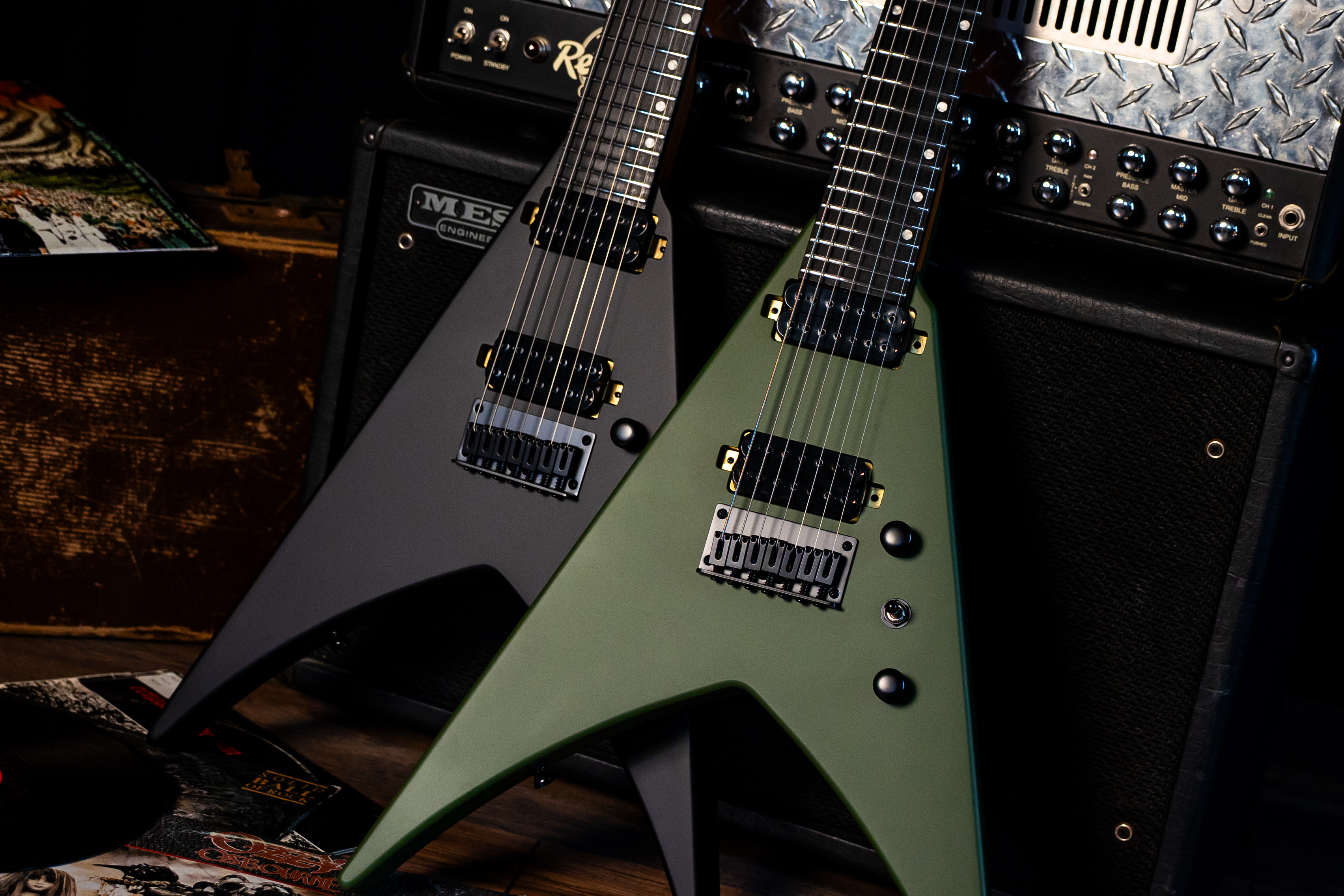
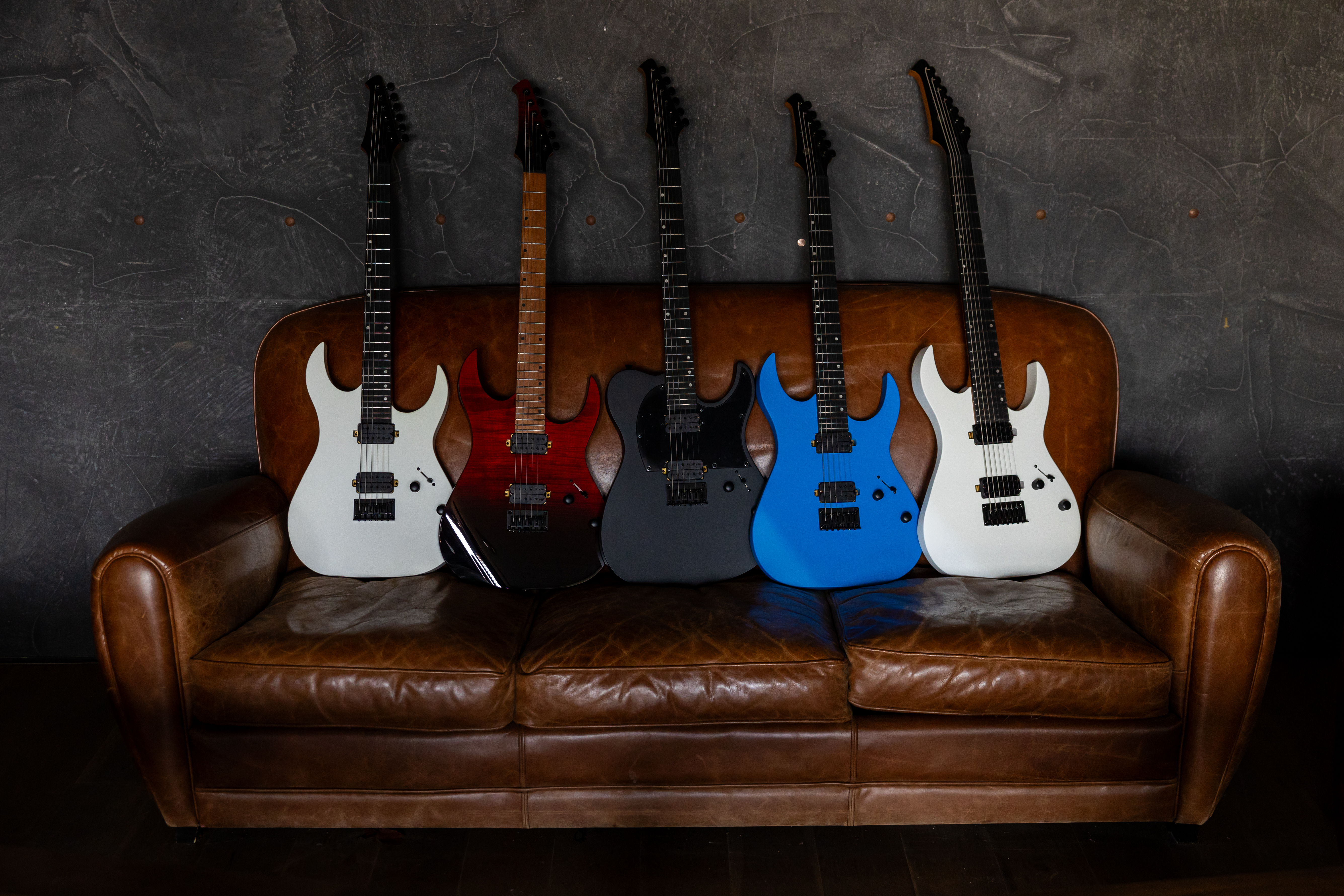
The S-400 is a familiar double cutaway and a strong all-rounder. The V-400 is the full-on metal statement. The L-400 is a classic single-cut with a 24.75″ scale that some players find comfortable to reach. There are T and X shapes as well. Under the skin, they all share the same core spec: roasted poplar body, Canadian roasted maple neck, 24 jumbo frets and Villain humbuckers. So choose the one you’ll be proudest to pick up. Our guide to Spira body shapes breaks down how each one sits and plays.
Buying as a gift?
If you’re buying for someone else, a few tips:
- Ask what they listen to. If their favourite bands are heavy, everything above applies. If they want to tune really low, mention it to the dealer.
- Check if they’re left-handed. This is easy to miss and hard to fix after the wrapping comes off. The S-400 and S-407 both come in left-handed versions.
- Let them choose the shape. If you can, take them to a dealer or show them the range. Shape is personal.
- Ask the dealer about a setup. A guitar that plays well from the first day makes for a much better first impression.
The takeaway
The best first metal guitar isn’t the one with the longest spec sheet. It’s the one that sounds heavy, stays in tune and feels good enough that you keep picking it up. That means humbuckers with real output, a fixed bridge, a comfortable neck with big frets, a stable build and a proper setup. Get those right, choose a shape you love, and the rest is practice.
That’s what the Spira 400 Series is built around: serious metal specs in a guitar a new player can grow into for years. Find your nearest Spira dealer and try a few shapes for yourself.

Related Posts